Lancaster County radon guidance EPA action level: 4.0 pCi/L Verify PA DEP certification

Lancaster County Radon Resource

Radon test came back high? Get clear next steps without the panic.

Independent guidance for Lancaster County homeowners who need to understand a radon result, compare mitigation options, or connect with a local provider.

  • Not a contractor
  • No pressure sales pitch
  • PA certification-first guidance

What this site does

Practical radon guidance first. Local quote routing only when you ask.

Lancaster Radon Help was built for homeowners who need a plain-English answer before they talk to a contractor. The goal is to help you understand the radon mitigation process, organize the details a provider will ask for, and avoid guessing your way through a high test result or real estate deadline.

This website is intentionally independent. We are not pretending to be a radon mitigation company. If you request help, your information may be forwarded to a local provider serving your area so they can contact you directly.

Simple next steps

From test result to a clearer plan.

1

Share the basics

Radon result, ZIP code, town, foundation type, and whether you are on a real estate deadline.

2

Know what to ask

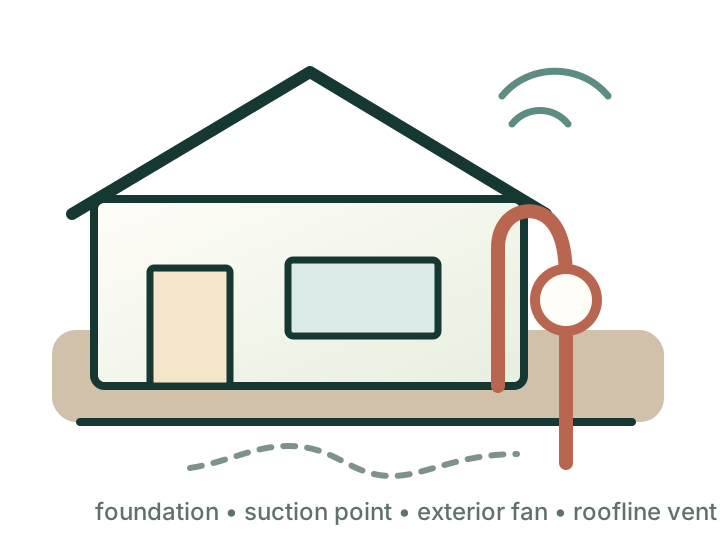
Learn how suction points, sump pits, crawl spaces, fan placement, and testing affect the project.

3

Connect locally

Your request may be routed to a provider serving Lancaster County for estimate follow-up.

What Lancaster County homeowners should know

Radon is a naturally occurring radioactive gas that can enter homes through cracks, gaps, sump pits, crawl spaces, floor drains, and other openings in the foundation. You cannot see it, smell it, or taste it. The only way to know your home's level is to test.

A radon mitigation system is designed to reduce the amount of radon entering the living space. In many local homes, that usually means an active soil depressurization system: a pipe, fan, and venting setup that pulls radon from beneath the foundation and vents it above the roofline.

Before requesting an estimate

Gather the test result, test location, foundation type, basement/crawl space details, sump pit information, and any inspection or settlement deadline.

Before hiring anyone

Confirm PA DEP certification, ask where the fan and piping will go, review the warranty, and ask whether post-mitigation testing is included or recommended.

Nearby service areas

Radon guidance for Lancaster County communities.

Quick answers

Common radon questions.

What radon level needs mitigation?

EPA recommends homes be fixed at 4.0 pCi/L or higher. Homeowners may also consider reducing levels between 2.0 and 4.0 pCi/L.

Is Lancaster County a radon-risk area?

Pennsylvania has significant radon risk. Local homeowners should test because radon levels can vary from one home to the next.

Are radon contractors certified in Pennsylvania?

Pennsylvania requires certification for radon mitigation work, subject to limited exceptions. Confirm certification before hiring.